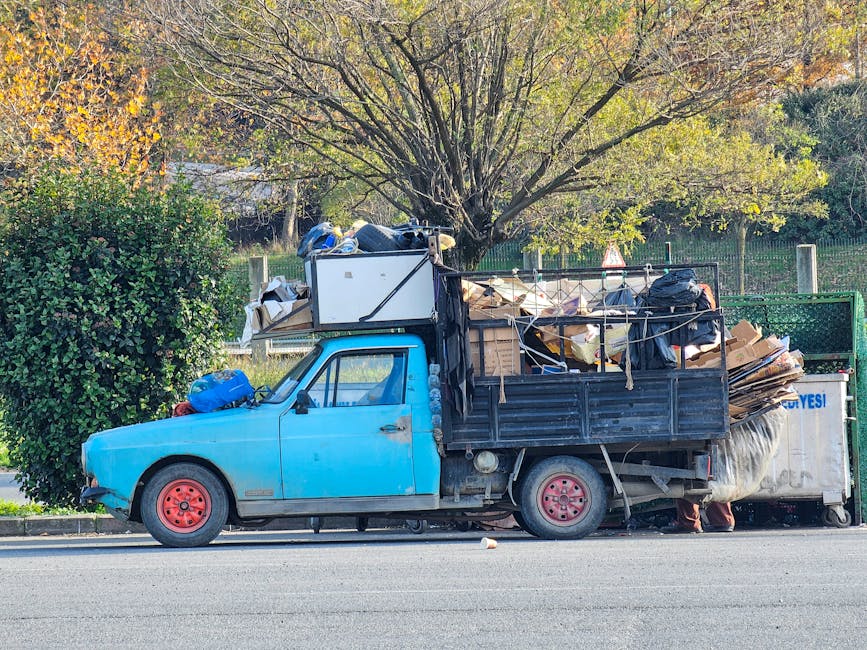
Cheap rubbish collection versus licensed service in Twickenham

If you are comparing cheap rubbish collection versus licensed service in Twickenham, you are probably trying to balance three things at once: price, convenience, and peace of mind. That's fair enough. Nobody wants to overpay for a few bulky items, but nobody wants a knock-on-the-door problem later because waste was tipped illegally or handled badly.
The tricky part is that the cheapest option is not always the cheapest in real life. A low quote can look brilliant on a busy Friday afternoon, then suddenly become expensive if the crew refuses extra items, leaves mess behind, or cannot prove where the waste went. A licensed service is usually more structured, more transparent, and far easier to trust when the job matters.
This guide breaks down the difference in plain English. You will see how each option works, where the hidden risks sit, and how to decide what actually makes sense for your home, flat, garden, loft, office, or building project in Twickenham.
Why Cheap rubbish collection versus licensed service in Twickenham Matters
Rubbish removal looks simple until it isn't. One minute it is a broken wardrobe and a few black bags. Next minute it is a mix of furniture, renovation offcuts, garden waste, and a very awkward sofa that will not fit down the stairs. In Twickenham, where homes range from compact flats to larger family houses and small businesses, the way waste is collected can make a real difference.
The reason this comparison matters is not just the price tag. It also affects legality, speed, reliability, and how confidently you can clear space without second-guessing the outcome. Cheap rubbish collection can be fine in some situations, but only if it is properly organised and lawful. If it is not, the savings can disappear fast.
People often assume all rubbish collectors do roughly the same job. Not really. A licensed service should operate with the right waste handling practices, clear pricing, and proper disposal routes. That means less stress for you, and fewer nasty surprises later. To be fair, when you are standing in front of a cluttered garage at 8am, the last thing you want is a debate about what counts as "extra".
Practical takeaway: Cheap works best when it is still professional. Licensed works best when you want fewer risks, clearer accountability, and a cleaner result from start to finish.
If you are clearing a home, garage, loft, or office, it can also help to compare the right service type for the waste you actually have. For example, a broader waste removal approach may suit mixed loads, while more targeted services such as house clearance or garage clearance can be more efficient for specific jobs.
How Cheap rubbish collection versus licensed service in Twickenham Works
At a basic level, both options remove unwanted waste. The difference is in how they are priced, handled, documented, and disposed of.
Cheap rubbish collection usually means a low headline price, fast response, and a lighter-touch service model. Sometimes that is totally fine. But the lower price may depend on strict item limits, cash-only payment, limited labour, or a quick turnaround with less flexibility. In some cases, the quote only looks cheap until the team arrives and starts adjusting the price because the waste is heavier, awkward, or more voluminous than expected.
Licensed service usually means the operator is set up to collect and transport waste legally and responsibly. The service may cost a little more, but you are generally paying for proper handling, better communication, and a cleaner paper trail. That is especially useful if you are a landlord, letting agent, business owner, or anyone who wants traceability and professionalism.
In real life, the process tends to look like this:
- You explain what needs removing, often with photos.
- The provider estimates the load, access, labour, and disposal type.
- A price is offered, sometimes fixed, sometimes adjusted after viewing the waste.
- The team arrives, loads the waste, and takes it away.
- The waste should be dealt with through proper disposal or recycling routes.
A licensed service should be able to explain what happens to the waste in plain language. If the answer is vague, that is a sign to slow down. You do not need a lecture, but you do need clarity.
For household projects, the service type also matters. A move-out may need flat clearance, while a bigger declutter may suit home clearance or loft clearance. Matching the job to the service often saves money more effectively than chasing the lowest quote in town.
Key Benefits and Practical Advantages
There is a time and place for both budget collection and licensed removal, but the benefits are different. Choosing well means understanding what you are buying, not just what you are paying.
- Lower upfront spend: Cheap collection can be useful for small, straightforward loads.
- Speed: Some providers can collect quickly, which is handy when you need space cleared the same day or next day.
- Less effort for you: A proper crew handles lifting, loading, and transport, which matters when the items are heavy or awkward.
- Reduced legal and reputational risk: Licensed services help reduce the chance that waste is dumped illegally or handled in a way that causes trouble later.
- Better for mixed waste: Many homes and businesses generate a messy combination of rubbish, old furniture, packaging, and renovation debris. A structured service is often better equipped for that.
- More predictable results: Less haggling, fewer arguments over item counts, and fewer "that'll be extra" moments.
There is also a practical benefit people miss: time. A cheap service may seem shorter on paper, but if you have to supervise everything, re-sort the waste, or chase the team afterwards, it costs you time and energy. And honestly, that adds up quickly.
If you are disposing of bulky items, it may also be worth looking at related services like furniture clearance or furniture disposal, especially when the load contains broken chairs, wardrobes, or worn-out soft furnishings that need careful handling.
Who This Is For and When It Makes Sense
This comparison is useful for more people than you might expect. It is not only for someone with a skip-worthy pile outside the front door. In Twickenham, the decision comes up in ordinary situations all the time.
Cheap rubbish collection may suit you if:
- you have a very small load and can clearly describe it;
- the items are straightforward to lift and access;
- you are clearing a few bags, one appliance, or a small piece of furniture;
- you have checked what is included and the quote is genuinely clear;
- you are comfortable managing a simpler, lower-friction service.
Licensed service makes more sense if:
- you have mixed waste or a larger volume;
- the job includes access issues, stairs, shared entrances, or parking pressure;
- you are a landlord, tenant, business, or managing agent;
- the waste includes items that should be treated with extra care;
- you want a more reliable and transparent process.
A small note from the real world: a "cheap" collection often becomes less cheap once the collector sees a packed loft, three flights of stairs, and a few items nobody mentioned on the phone. Happens more than people like to admit. Best to be honest from the outset.
For local business premises, a structured service such as business waste removal or office clearance is usually the safer route because business waste needs more consistent handling and scheduling than a one-off domestic tidy-up.
Step-by-Step Guidance
If you want to choose confidently, the easiest route is to compare services step by step rather than relying on headline prices alone.
- List what needs collecting. Be specific. "Old stuff" is not enough. Write down furniture, bags, rubble, wood, garden waste, appliances, or mixed rubbish.
- Check access. Note stairs, narrow hallways, parking restrictions, or long carries. Access changes the real cost more than people think.
- Ask what is included. Does the price cover labour, loading, disposal, recycling, and VAT if relevant? If not, what is extra?
- Ask about licensing and waste handling. A serious provider should answer clearly. No drama, just clarity.
- Compare like for like. A cheaper quote that excludes half the job is not a cheaper quote. It is just a smaller number.
- Choose the service that fits the load. For example, a garage clear-out may call for garage clearance, while garden cuttings and broken outdoor items may fit garden clearance.
- Prepare the waste. Put everything in one accessible area if possible. Keep sharp items separated. This helps the team work quickly and safely.
- Confirm payment terms before collection. That sounds obvious, but a surprising number of headaches start here.
If you want a more organised approach, a planned service can also help you align waste removal with other property tasks. That is useful during a move, refurbishment, or declutter when everything else already feels a bit chaotic.
Expert Tips for Better Results
Here is the stuff that tends to save people money and stress in practice, not just in theory.
- Take clear photos in daylight. Dark hallway pictures taken at 9pm make everything look worse and confuse pricing. Morning light helps, oddly enough.
- Separate reusable items from true waste. If some furniture can be donated, sold, or kept, say so before the job starts.
- Be precise about bulky items. A sofa bed is not the same as a single armchair. A broken wardrobe is not the same as a flat-pack box.
- Ask whether the crew can handle dismantling. That matters for wardrobes, desks, and some office furniture.
- Use service pages that match the job. A specialist service often performs better than a generic one because the crew knows what to expect.
- Review sustainability information. If recycling matters to you, look for a provider with a clear approach to reuse and recycling.
If you are pricing something more complex, such as a refurbishment or strip-out, you may also want to compare builders waste clearance with standard rubbish collection. Construction waste is a different beast altogether. Dusty, heavy, awkward, and often more labour-intensive. Not glamorous, but there we are.
One more practical tip: if you are unsure, ask the provider to explain the quote in plain English. If they cannot do that without wobbling, take note.
Common Mistakes to Avoid
Most bad experiences with rubbish collection come from the same handful of mistakes. The good news? They are all avoidable.
- Choosing purely on price. The lowest quote can hide extra charges or poor disposal practices.
- Under-describing the load. If you omit bulky items, mixed waste, or difficult access, the price may change later.
- Not checking what happens to the waste. If nobody can explain disposal, recycling, or handling, that is a problem.
- Ignoring access and parking. In Twickenham, a small access issue can make a large difference to time and cost.
- Assuming all services are licensed. They are not. Never assume.
- Leaving the job half-prepared. Scattered bags, sharp debris, or blocked walkways slow everything down.
- Forgetting to compare service scope. A cheap collection of one load is not comparable to a service that includes labour, loading, and disposal.
It sounds obvious, but the cheapest service often becomes the most expensive when you have to rebook, clean up, or deal with a poor result. Let's face it, nobody enjoys paying twice for the same mess.
Tools, Resources and Recommendations
You do not need a complicated toolkit to make a good decision. What you do need is a simple way to organise the information before you request a collection.
- Phone camera: Take photos of the waste from a few angles.
- Rough item list: Write down the main things to remove.
- Access notes: Mention stairs, driveways, gates, or parking restrictions.
- Basic measurements: Helpful for large furniture or tight spaces.
- Timeline: Decide whether the job is urgent or can wait a few days.
For many households, the best starting point is to compare the most relevant service type rather than asking for "rubbish removal" in the abstract. That might mean house clearance for a whole property, flat clearance for smaller access spaces, or loft clearance when the problem has been growing quietly for years in a dusty corner you keep meaning to sort out.
If you also want a clearer picture of value, check the provider's pricing and quotes information, because transparent pricing is one of the simplest signs of a serious operator.
And if sustainability matters to you, look for a clear policy on recycling and reuse. A practical recycling and sustainability approach is usually a good sign that the company is thinking beyond the immediate load.
Law, Compliance, Standards and Best Practice
Waste collection in the UK is not just a matter of chucking things into a van and driving off. A lawful service should operate with proper waste handling expectations, keep waste moving through legitimate disposal routes, and avoid fly-tipping or careless dumping. You do not need to be an expert in the regulations yourself, but you should expect the service provider to be.
Best practice usually includes the following:
- clear identification of what is being collected;
- responsible transport and transfer of waste;
- appropriate handling of recyclable and non-recyclable items;
- transparent pricing and service terms;
- careful work on site, especially around stairs, glass, sharp edges, and heavy items;
- respect for property, neighbours, and access routes.
For businesses, compliance expectations are typically higher because waste streams can be more varied and record-keeping matters more. A workplace clearance or regular waste arrangement is usually best handled through a proper service such as business waste removal, and where relevant the provider's insurance and safety information should be easy to understand.
It is also sensible to review the provider's service terms and complaints process before booking. That sounds dry, I know, but it gives you a fallback if something goes wrong. A reputable business should be open about its terms and conditions and complaints procedure.
There is one more thing worth saying: a licensed service should be comfortable discussing how it protects customers, staff, and the public. If the company's health and safety policy is available and sensible, that is a reassuring sign.
Options, Methods, or Comparison Table
Here is a straightforward comparison to help you choose without getting buried in sales talk.
| Factor | Cheap rubbish collection | Licensed service |
|---|---|---|
| Upfront price | Often lower at first glance | May cost more, but usually clearer |
| Transparency | Can be limited if the quote is brief | Usually better defined and easier to understand |
| Risk | Higher if licensing or disposal practices are unclear | Lower, provided the provider is genuinely compliant |
| Best for | Small, simple, low-value collections | Mixed waste, larger jobs, or situations needing trust and consistency |
| Price certainty | Can change if the job turns out bigger than expected | More likely to be explained clearly before work begins |
| Peace of mind | Depends heavily on the operator | Usually stronger because of process and accountability |
For many Twickenham households, the decision comes down to this: if the load is tiny and simple, a budget option may be fine; if the job is more involved, a licensed service is usually the safer long-term choice. Simple as that, really.
Case Study or Real-World Example
Picture a typical Twickenham Saturday morning. A couple are clearing a spare room before family arrives, and the room has somehow become a magnet for old furniture, cardboard boxes, and half-finished storage plans. Nothing dramatic, just a proper nuisance.
They first consider the cheapest available collection because the headline price looks attractive. Then they list the items properly: a wardrobe, mattress, bedside table, several sacks, a broken office chair, and a few loose bits in the loft that "weren't really planned". Once they include access via narrow stairs and a short parking carry, the cheap quote is no longer so cheap.
They switch to a licensed service with clearer pricing and ask for the right service type for the load. The team arrives, works steadily, and clears the room in one visit. No argument over hidden extras, no last-minute uncertainty, no awkward attempt to fit a wardrobe through a staircase sideways like a comedy sketch.
The lesson is not that cheap is always bad. It is that clarity beats optimism. When the scope is honest, a licensed service can often end up being better value because the job is done properly the first time.
Practical Checklist
Use this quick checklist before you book any rubbish collection in Twickenham:
- Have I written down exactly what needs to go?
- Have I included photos of all items and access points?
- Do I know whether the load is domestic, business, garden, or builders waste?
- Have I checked whether the service is licensed and transparent?
- Do I understand what is included in the quote?
- Have I asked about extra charges for stairs, heavy items, or awkward access?
- Do I know when the collection will happen?
- Have I confirmed payment terms?
- Have I asked what happens to the waste afterwards?
- Have I chosen the service that fits the job, not just the cheapest headline price?
Tick those off and you will avoid most of the usual headaches. Nice and boring, which is exactly what you want sometimes.
Conclusion
Cheap rubbish collection versus licensed service in Twickenham is not really a battle between good and bad. It is a question of fit. Cheap collection can work for very small, simple jobs when the operator is clear and responsible. A licensed service is usually the better choice when the waste is mixed, the access is awkward, the job is bigger, or you simply want fewer surprises.
The smartest approach is to compare the full picture: price, scope, access, legality, and peace of mind. If one quote is lower but leaves you guessing, it may not be the deal it first appears to be. If another option costs more but gives you clarity and proper handling, that can easily be better value overall.
Get a free quote today and see how much you can save.
In the end, the best rubbish collection is the one that clears the mess without creating new problems. That's the real win.
Frequently Asked Questions
Is the cheapest rubbish collection in Twickenham always the worst option?
No. A low-cost collection can be perfectly fine for a small, simple load if the provider is clear about what is included. The issue is not cheapness itself; it is unclear pricing, poor handling, or a lack of proper licensing.
Why does a licensed rubbish service usually cost more?
Licensed services often include more than transport. You are usually paying for proper handling, compliant disposal, trained labour, better equipment, and a more reliable process. That extra structure can be worth it, especially for bigger or mixed loads.
How do I know if a rubbish collector is licensed?
Ask directly and expect a clear answer. A professional provider should be able to explain its waste handling approach without sounding vague or defensive. If the response feels slippery, that is a bad sign.
What types of waste are better suited to a licensed service?
Mixed household waste, bulky furniture, builders waste, office contents, and anything requiring careful loading or disposal are usually better handled by a licensed service. The same goes for larger or more awkward clearances.
Can I save money by separating my waste before collection?
Often yes. If you sort items clearly, remove reusable things, and make access easier, you can reduce time on site and sometimes reduce the cost. It also makes the job safer and faster.
What should I ask before booking cheap rubbish collection?
Ask what is included, whether there are extra charges, how payment works, whether the crew handles loading, and what happens to the waste after collection. Those few questions can save you a lot of trouble.
Is cheap rubbish collection suitable for flats and shared buildings?
Sometimes, but access issues can make simple jobs more complicated. In flats, narrow stairways, shared entrances, and parking restrictions often make a more organised service a better choice.
What is the biggest risk of using an unlicensed waste collector?
The biggest risk is that waste may be handled improperly or dumped illegally, which can create legal and reputational problems. You also have less protection if the job goes wrong.
Do businesses in Twickenham need a different approach from homeowners?
Usually yes. Business waste often needs more consistent scheduling, clearer documentation, and a more structured service. A commercial clearance or regular collection is often best handled separately from domestic rubbish.
How can I get a better price without cutting corners?
Give accurate information, take good photos, choose the right service type, and make access as easy as possible. A fair quote is much more likely when the provider understands the job properly from the start.
What if I only have a few items to remove?
If the load is tiny and the access is simple, a cheaper collection may be enough. Even then, it is worth making sure the provider is clear, professional, and upfront about disposal and payment.
Should I compare the quote against a house clearance or furniture disposal service?
Yes, if the job involves bulky household items or several pieces of furniture. Sometimes a service designed for the type of waste you have is better value than a generic rubbish collection. Matching the service to the job is half the battle.